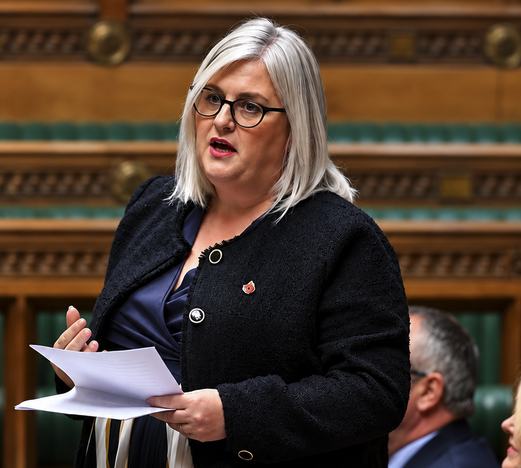
Michelle Welsh told the Commons that concerns about Nottingham’s maternity care persisted for more than 20 years, as the Nursing and Midwifery Council apologised for failing to act quickly enough.
The MP leading oversight of improvements at Nottingham’s maternity services has called for a review of the three national bodies that regulate doctors, nurses, midwives and hospitals, describing the way concerns in Nottingham went unaddressed as the product of “a broken system”.
Michelle Welsh, Labour MP for Sherwood Forest, made the call in the House of Commons on Monday during a debate to mark Baby Loss Awareness Week. The debate was put forward by Ms Welsh with fellow Labour MP Andy MacNae and the former Conservative health secretary Sir Jeremy Hunt.
In response, the Nursing and Midwifery Council, which regulates midwives across the UK, has apologised. Paul Rees, its chief executive and registrar, told the Nottingham Post the regulator was “truly sorry” that it had failed to act quickly enough or communicate clearly with affected families in the past.
The exchange comes almost four months after publication of the largest maternity review in NHS history. Led by the senior midwife Donna Ockenden and published on 24 June, the review examined more than 2,500 family cases at Nottingham University Hospitals NHS Trust between 2012 and 2025. It concluded that at least 156 babies might have survived with appropriate care, and that a further 105 suffered serious injuries linked to failures in maternity care. Six mothers also died after substandard care. The review found that many of the underlying problems, including staffing shortages, gaps in mandatory training and a reluctance to listen to parents, had been known to the trust since at least 2010.
Ms Welsh’s argument goes beyond the trust. The General Medical Council, the Care Quality Commission and the NMC each have distinct responsibilities, she told MPs, yet families still had to fight for large-scale investigations to establish what had happened. She called for an examination of how the three bodies respond to concerns, share information and act on warning signs, and asked how serious concerns at the trust had been allowed to persist for more than two decades.
Her position gives the remarks particular weight in Nottingham. She chairs the learning and improvement board set up by NUH to provide independent oversight of its action plan, and is described by the Post as the government’s first maternity adviser. She has also spoken publicly about her own birth trauma at the trust in 2020.
Families affected by the scandal have long criticised the regulators. At a meeting in February 2025, some reported overhearing officials from the NMC and GMC say they did not understand why families were angry with them. Both regulators said at the time that they took the reports seriously.
In his statement, Mr Rees said the NMC had learned during the Ockenden review that it needed to change how it worked, based on feedback from bereaved and harmed families, and that it would apply that approach to maternity reviews now under way in Leeds and Sussex.
The GMC, which regulates doctors, said what the Nottingham families had endured should never have happened. A spokesperson said it shared information with the NMC and CQC in the interests of patient safety, welcomed scrutiny and acted on lessons from major reviews.
The CQC, which inspects hospitals in England, defended its record more firmly. It said it had repeatedly held the trust to account, including prosecuting it on two separate occasions for failing to provide safe care and treatment to women and babies, and had used families’ evidence to trigger additional inspections and enforcement action. It acknowledged, however, that there was more it could do to make its regulation of maternity care effective.
None of the three regulators addressed Ms Welsh’s central proposal directly, and the government has not said whether it will commission the review she is seeking.
The Ockenden review made recommendations for national change, including extending Martha’s Rule, which gives patients and families the right to request a rapid second opinion, to every maternity department in England. Unusually, Ms Ockenden’s team will continue to oversee the trust’s improvement programme for the next two years. NUH has said it fully accepts the review’s findings and takes responsibility for the failings it describes.